DRDLiquid Handling
Menu
Contact DRD
← Back to SLAS highlights

Accepted SLAS 2026 Poster · 1041-B

Differential Pipetting™ from 0.1 µL to 20 µL

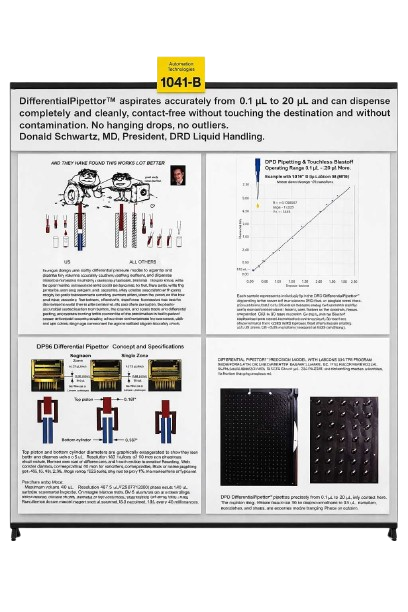
DRD’s accepted Automation Technologies poster describes a dual-piston mechanism for accurate tiny-volume aspiration and complete, clean, contact-free delivery without touching the destination.

DRD Differential Pipettor poster 1041-B for SLAS 2026
Poster 1041-BAutomation Technologies · Session B
ConferenceSLAS 2026
DateMonday, February 9
Time2:00–3:00 PM
RoomExhibit Halls AB
LocationBoston, MA

Patented dual-piston Differential Displacement Pipettors are designed to aspirate samples down to nanoliter volumes and deliver even the smallest samples contact-free.

The problem below 10 µL

Manual and automated pipetting at small volumes can be affected by unstable aspiration, hanging drops, and delivery techniques that require contact with the receiving surface. These effects introduce operator- and geometry-dependent variability into a foundational laboratory operation.

Two pistons, two useful behaviors

Two tightly sealed pistons of slightly different diameters move together in one chamber. Their cross-sectional difference creates a small net displacement for fine aspiration resolution. Operating one piston alone creates the higher flow needed to propel a small sample cleanly from the tip to its destination.

Reported performance

The abstract reports a 0.1–20 µL working range for the handheld configuration, a 1 µL coefficient of variation of 2%, accuracy of 3–4%, and a standard deviation near 0.02 µL across the stated range.

One unit. Two modes.Fine differential resolution for aspiration, plus high-flow power for complete contact-free dispensing.

This page summarizes DRD’s submitted SLAS abstract. Performance depends on configuration and study conditions; application-specific validation is recommended.
96-channel configuration

Calibrated for 0.25–10 µL transfers.

The SLAS configuration combined differential aspiration, high-flow delivery, and deep-grip mandrels for a compact residual air volume.

Working coverage0.25–10 µL96-channel setup
Differential stroke2 mm / µLFine aspiration movement
Resolution multiplier30×Reported configuration
Dispense plate384 wellsFour-quadrant program

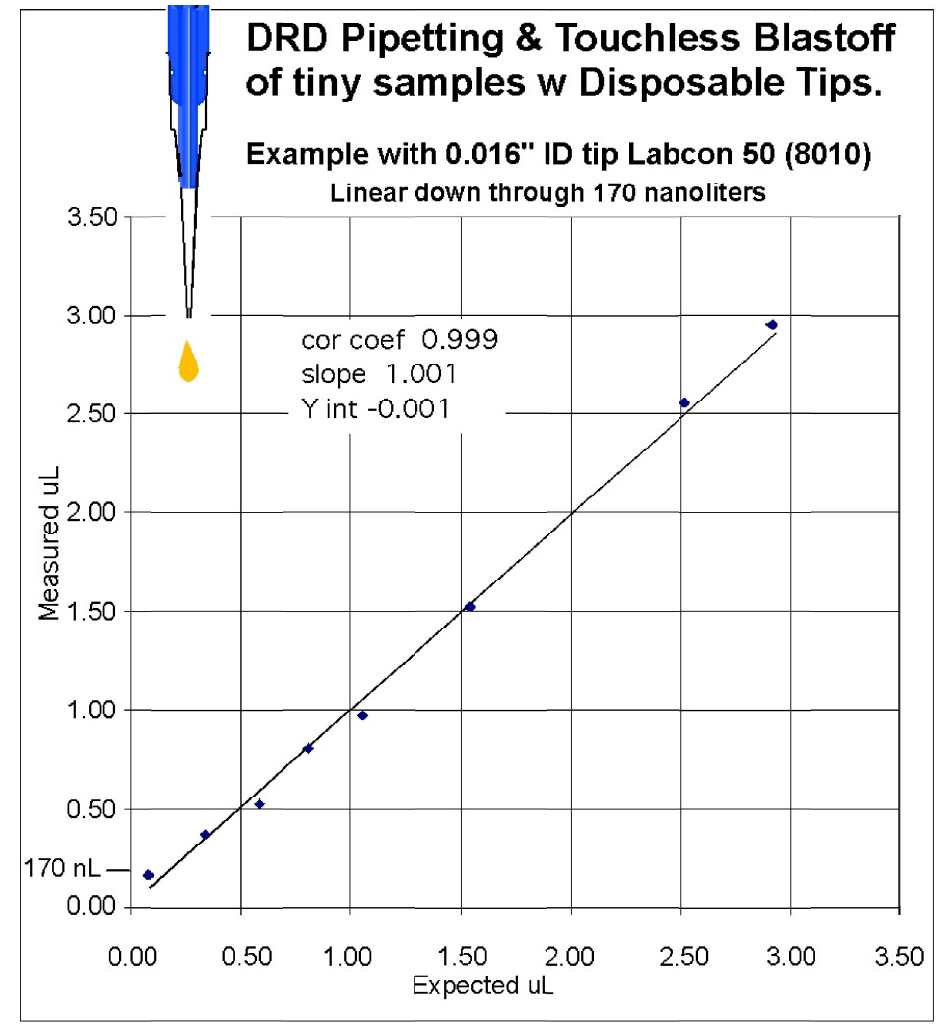
Calibration model

Observed volume = 1.045 × theoretical − 429 nL

The submitted example used regression of observed versus expected volume to call the exact piston excursion needed for a target transfer.

DRD measured versus expected pipetting calibration graph

Visual demonstration

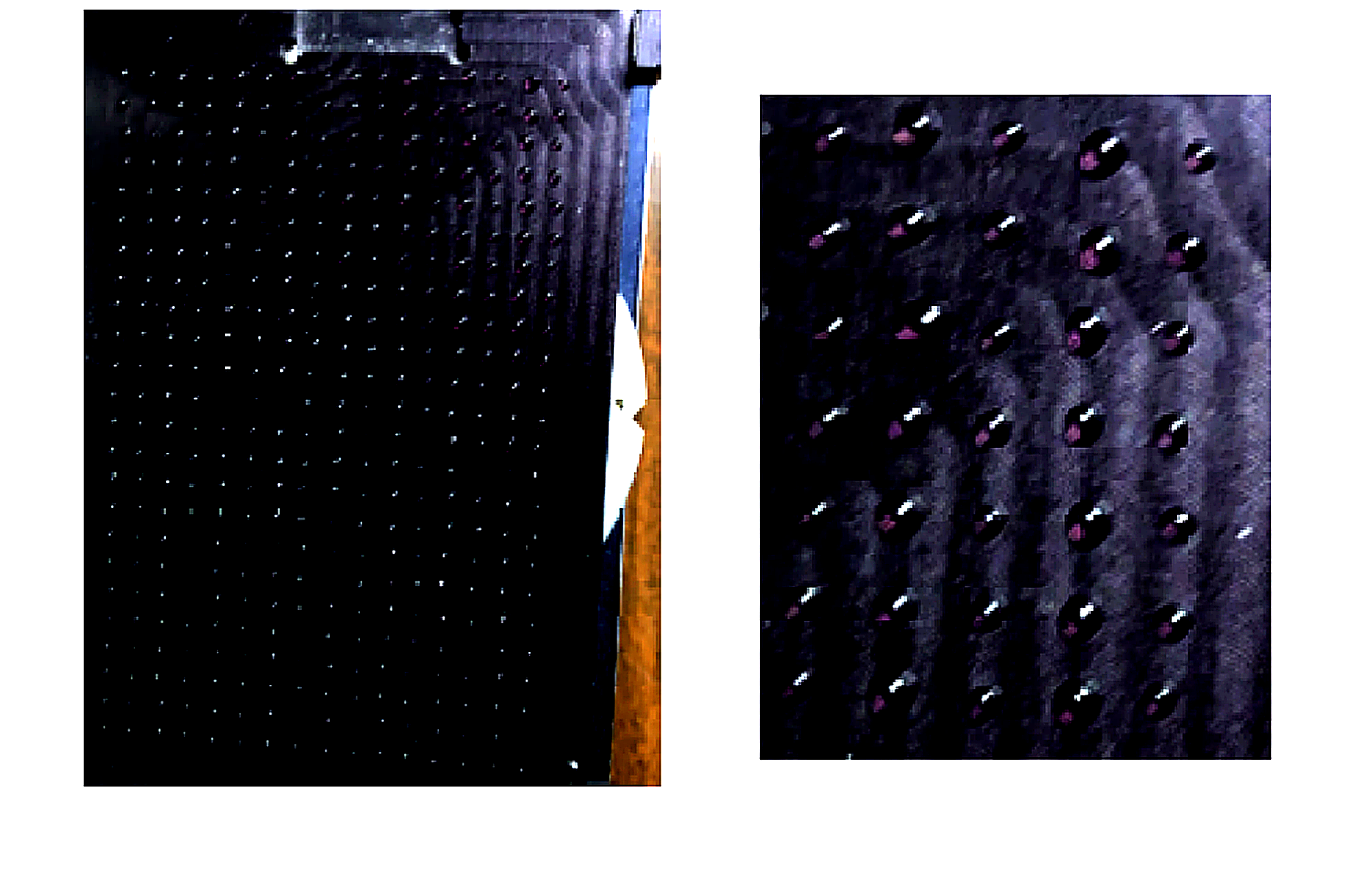
Four volumes across all 384 wells.

The program aspirated 96 samples and delivered them into four plate quadrants at 0.5, 1.0, 1.5, and 2.0 µL.

384-well plate showing four contact-free delivery volumes
Dual-piston Differential Displacement™

Why it works

Resolution and flow no longer have to be a tradeoff.

  • Fine differential aspirationThe difference between piston areas creates the small net displacement.
  • High-flow releaseSingle-piston operation provides the airflow needed for contact-free delivery.
  • Protected platformU.S. Patents 11,491,477; 11,813,606; and 11,951,470.

Official invitation

Accepted for the SLAS 2026 International Conference & Exhibition.

The SLAS2026 Program Committee invited Henry Schwartz to present DRD’s work in the Automation Technologies track in Boston.

See the full event story
Society for Laboratory Automation and Screening

Poster Presentation: Session B

Presentation date
Monday, February 9, 2026
Session time
2:00–3:00 PM
Poster number
1041-B
Track
Automation Technologies
Room
Exhibit Halls AB
Venue
Boston Convention Center