
Precision nano- and micro-volume liquid handling without touch-off.
Small-volume pipetting still fails, millions of times a day.
Failed aspirations
Sub-microliter volumes are hard to draw accurately, so transfers come up short.
Hanging drops
Samples cling to the tip instead of releasing, leaving delivery incomplete.
Touch-off variability
Dragging the tip along a vessel wall introduces operator-to-operator error.
Cross-contamination
Contact dispensing and carryover raise the risk of well-to-well contamination.
Reagent waste
Inaccuracy drives duplicates and triplicates, burning through costly reagents.
Poor reproducibility
Miniaturized assays lose consistency exactly where precision matters most.
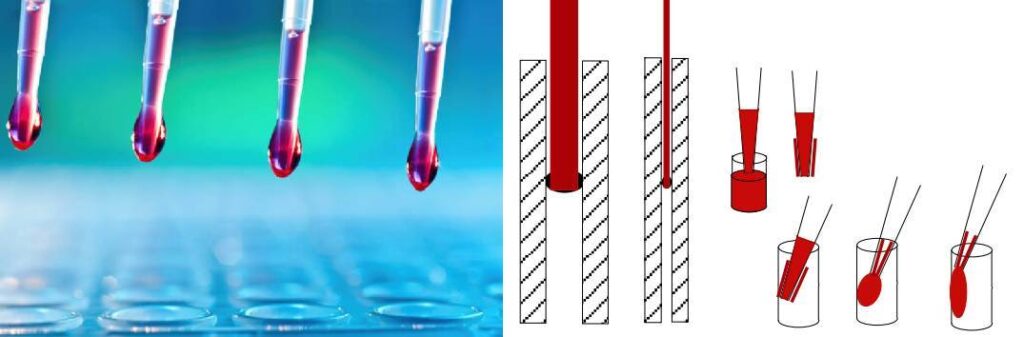
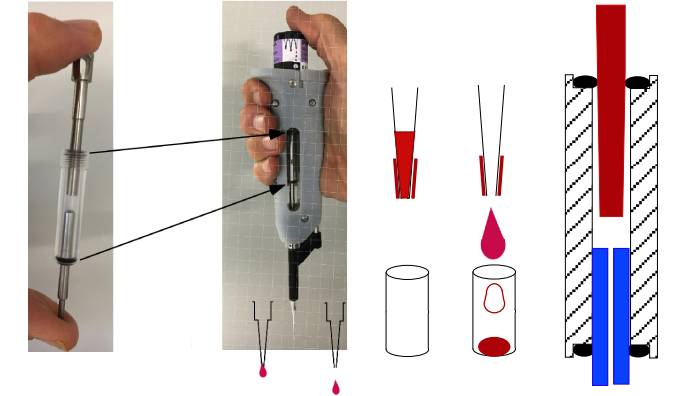
Differential Displacement™: two pistons, one clean release.
Hold straight, aim, and push.
The numbers behind contact-free delivery.
Built for the assays where volume precision decides the result.
High-throughput screening
Fast, accurate transfers across large campaigns.
384- & 1536-well assays
Contact-free delivery into dense plate formats.
Cell-based assays
Gentle, precise dosing for sensitive cell work.
Diagnostics sample prep
Reproducible small-volume steps for clinical workflows.
NGS & genomics
Precise reagent metering for library prep.
Immunochemistry
Consistent low-volume additions for ELISA and beyond.
OEM liquid-handling modules
Differential cores for integration into instruments.
Assay miniaturization
Shrink reactions and reagent cost without losing accuracy.
Choose your path: a lab instrument, or a core to build with.
Instruments you can run today
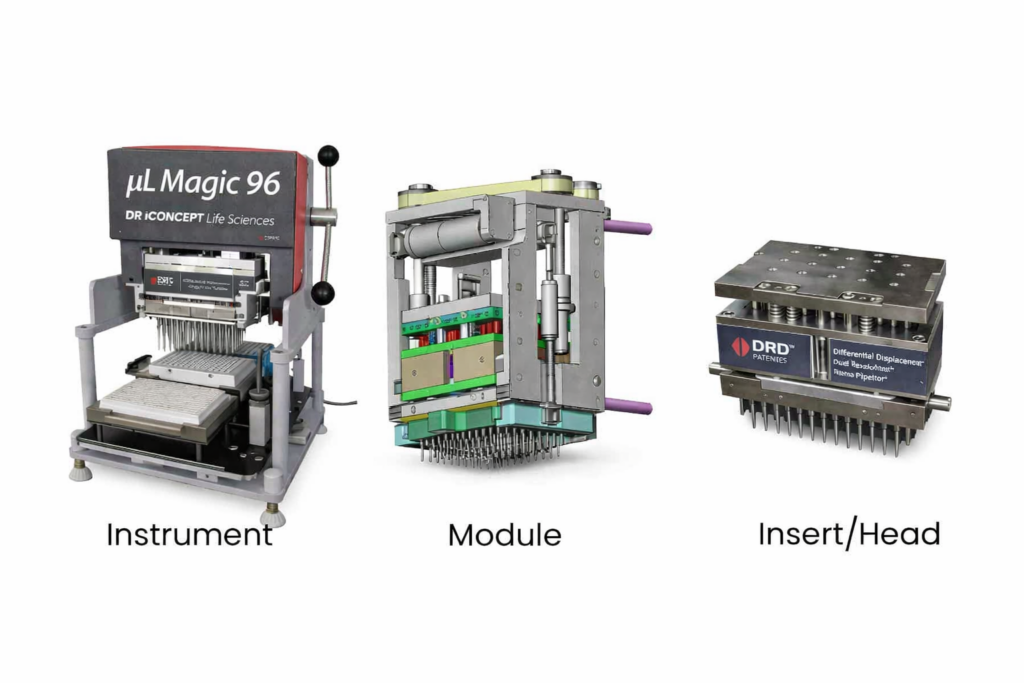
The world’s first multichannel Differential Pipettor™ — nanoliter aspiration with built-in high-flow, contact-free blow-off.
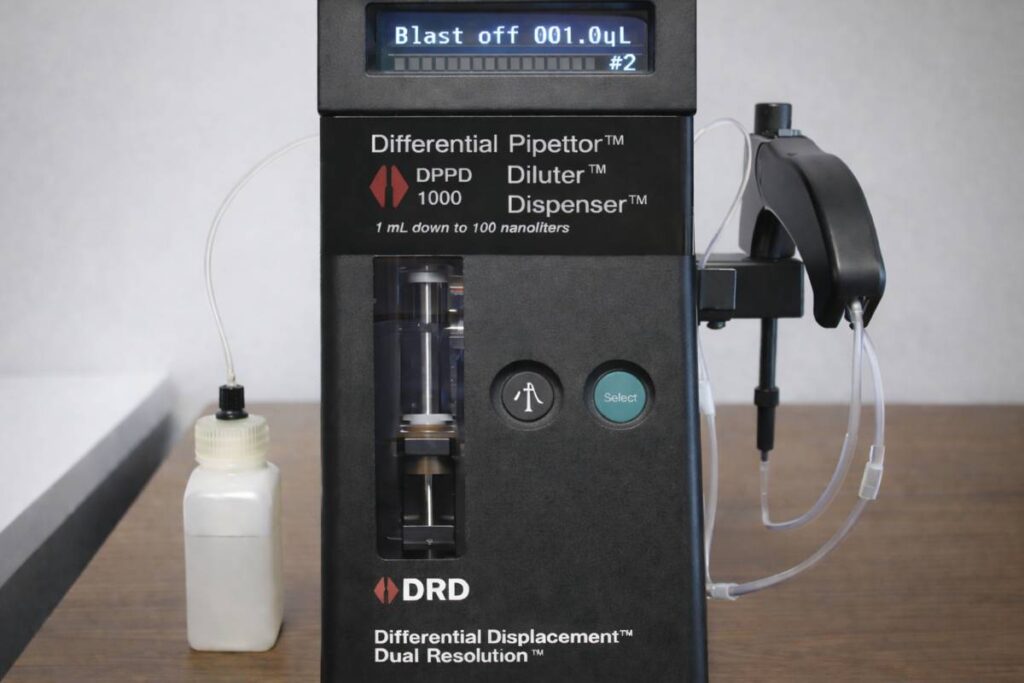
A precision system for ultra-small volumes down to nanoliters that still moves large volumes fast when needed.
Handheld Differential Pipetting™ for fast, intuitive, contact-free transfers at the bench.
Cores to build your next instrument on
- Pump modulesDifferential pumping units for automated platforms and multichannel heads.
- Dual-resolution syringeFine low-volume control plus large-volume throughput in one syringe core.
- Integrated liquid-handling cores96-channel and custom heads engineered for contact-free delivery.
Invest in the next core liquid-handling platform.
Catalytic Stage 1 Private Placement
4,343 common shares have been subscribed. An additional 700 shares are reserved for cancellation of $12,000 in debt under the same terms; the remaining balance is expected from 9,542 reserved shares.
Stage 2 private placements are anticipated at $2 million in 2027 and $3 million in 2028.
Company-supplied placement status. Terms are subject to definitive offering materials, availability, and applicable securities laws.
01 · Patented technology
Three issued U.S. patents protect the core differential mechanism.
02 · Large, layered market
Lab automation, life-science tools, diagnostics, and screening.
03 · Multiple business models
Product sales, OEM modules, licensing, and strategic partnerships.